

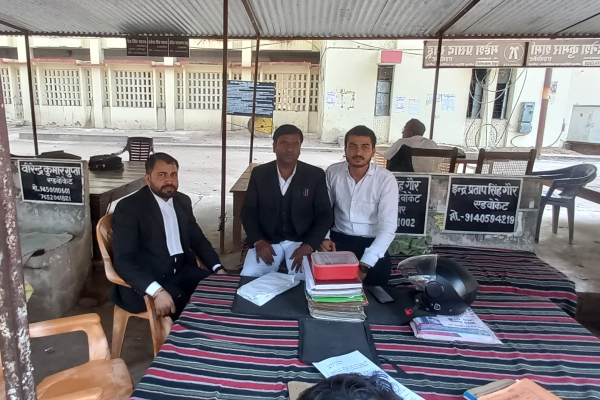
Filing a consumer complaint in India requires proper preparation, supporting documents, and legal compliance. Whether you are approaching the District, State, or National Consumer Disputes Redressal Commission, a well-prepared consumer complaint filing checklist ensures that your case is strong and accepted without objections.
This guide covers everything you need to prepare before filing a complaint.
1. Complainant’s Details
The complainant must provide complete personal or organizational details such as:
- Full Name, Father’s/Husband’s Name
- Age, Gender, Occupation
- Residential Address & Contact Information
- Aadhaar/PAN details for identity
- Status – Individual, Company, NGO, or Society
- Jurisdiction – District, State, or National
2. Opposite Party (Service Provider/Seller) Details
Accurate details of the opposite party (service provider, company, or seller) must be mentioned, including:
- Name of the company/organization or individual
- Type of business – Proprietor, Partnership, or Company
- Official address & contact details
- GST/Registration Number (if available)
- Record of prior communications with the company
3. Nature of Transaction
The complaint must clearly mention the product or service involved:
- Date of purchase/service availed
- Invoice/Bill details
- Amount paid and mode of payment
- Warranty/Guarantee details
- Order/Booking ID (for online purchases)
4. Nature of Deficiency / Grievance
The grounds of the complaint should specify the exact deficiency, such as:
- Defective product
- Deficient service
- Delay in delivery or non-delivery
- Overcharging or misleading advertisement
- E-commerce or real estate disputes
- Insurance, banking, or telecom deficiency
5. Proof of Purchase / Transaction Documents
Supporting documents strengthen your case, including:
- Invoice/Bill/Payment receipts
- Warranty or Guarantee card
- Booking/order confirmations
- Photos of defective/damaged products
- Bank statement or transaction proof
6. Action Taken Before Filing Complaint
Before filing in consumer court, efforts with the opposite party should be recorded:
- Complaint raised with the company (email/phone/portal)
- Company’s response (if any)
- Consumer Helpline ticket/reference number
- Legal notice (if sent) with proof of delivery
7. Compensation Claimed
The complainant must calculate and state the reliefs claimed:
- Refund amount (if applicable)
- Compensation for harassment, mental agony, or financial loss
- Litigation expenses
- Punitive damages (if applicable)
- Total claim amount
8. Jurisdiction (Based on Claim Amount)
Consumer Commissions handle cases based on the value of the claim:
- District Commission – up to ₹1 Crore
- State Commission – ₹1 Crore to ₹10 Crores
- National Commission – Above ₹10 Crores
9. Documents Required for Filing
Essential documents include:
- Vakalatnama/Authorization letter
- Complaint with affidavit
- Copies of bills, contracts, receipts
- Written communication with the opposite party
- Proof of identity (PAN/Aadhaar)
- Annexure index
10. Complaint Structure Should Include
Your complaint should follow a legal structure:
- Cause title with correct addresses
- Jurisdiction clause
- Chronology of facts
- Legal grounds of deficiency/unfair trade practice
- Reliefs claimed (refund, compensation, damages)
- Declaration that no other similar matter is pending
11. Filing Details
Consumer complaints can be filed in two ways:
- Online Filing via e-Daakhil Portal: https://edaakhil.nic.in/
- Physical Filing at Consumer Commission Office
Additional requirements:
- Filing fee (based on claim amount)
- Service of notice to the opposite party via Speed Post/Courier
✅ Conclusion
A well-prepared consumer complaint filing checklist ensures your case is strong, supported with proper documents, and filed in the correct jurisdiction. Consumers are empowered under the Consumer Protection Act, 2019, and a properly drafted complaint can help secure refunds, compensation, and justice against unfair trade practices.